
CTC Tea: The Powerhouse of Everyday Black Brew
When Sir William McKercher introduced CTC (Crush, Tear, Curl) method at the Amgoorie Tea Estate, he did not just invent a new processing technique, he created the backbone of a brew that billions reach for every morning. CTC tea offers bold, brisk, and irresistibly strong black tea that people crave. The deep colors, powerful flavors, and quick infusion that modern tea lovers prefer makes it a premium commodity that represents efficiency and consistency in every granular pellet. Whether you are a chai enthusiast, a bulk buyer, or simply curious about what makes your everyday tea so satisfyingly robust, a deep dive into CTC tea will reveal its history, ingenious production process, global impact, and why it dominates cups across continents.
History and Origin
The story of CTC tea begins in 1930–1931 at the Amgoorie Tea Estate in Assam, India. Sir William McKercher, the superintendent, developed the mechanical process to meet rising global demand for affordable and consistent tea. Unlike traditional orthodox methods which were labor intensive and slow, McKercher’s innovation used cylindrical rollers with sharp teeth to rapidly process leaves. This revolutionized the production process which a quick turnover. The CTC method spread rapidly in the 1950s across India, Africa and other tea producing nations. Today, CTC method dominates black tea manufacturing. For instance, in India, over 80% of tea production is CTC, making it the backbone of domestic consumption and exports. Other tea producing nations like Kenya and other African producers also rely heavily on CTC for strong, export-grade teas that fetch premium prices.
The Manufacturing Process
CTC production follows standard black tea steps but diverges sharply in the rolling phase to yield the much preferred hard and dense granules with high surface area. The manufacturing process undergoes the following stages:
· Plucking: Fresh leaves are harvested from the field with the standard two leaves and a bud (sometimes more for CTC) being plucked from the tea plant.
· Withering: The leaves are exposed in sunlight to lose about 50% of its moisture content for over 12–18 hours in troughs. This process makes the leaves to become pliable while concentrating juices.
· Crush, Tear, Curl: Withered leaves pass through rotorvane preconditioners and then through CTC machines with serrated rollers spinning at different speeds (roughly 10:1 ratio). This ruptures cell walls completely to create small pellets. The process accelerates oxidation (which is the next stage) by exposing polyphenols to oxygen and enzymes.
· Fermentation (Oxidation): Crushed particles are left to oxidize for 60–100 minutes to develop briskness, color and body of the final product.
· Drying and Sorting: Drying is done through firing to halt oxidation and enable sieving for sorting. Sieving helps to grade tea into particles like BP (Broken Pekoe), PF (Pekoe Fannings), or dust for different uses and meet different market demands.
Characteristics and Uses
Premium and quality CTC tea offers a malty, robust taste with golden liquor when milk is added. It is brisk and full-bodied rather than delicate. CTC’s quick brewing abilities and strength make it perfect for high-volume consumption in India, the UK, Middle East, Africa and beyond. CTC dominates tea bag blends and instant preparations due to its efficiency.
Benefits and Appeal
As black tea, studies indicate that CTC is rich in antioxidants like theaflavins and thearubigins. These antioxidants are known to support heart health, hydration, and potentially aiding weight management when consumed unsweetened. For maximum health benefits, one need to maintain a healthy lifestyle and regular exercising. CTC’s affordability and bold profile fuel massive demand in milk tea or chai cultures. The culture is more prominent in regions such as India that constitute the largest global share followed by the Middle East then spread in other regions.
Despite critiques of flavor homogenization compared to orthodox teas, CTC’s practicality transformed tea into an everyday staple for billions of people around the world. From roadside chai stalls in India to British breakfast cups, CTC’s powers reliable and satisfying brews. In a world seeking both tradition and convenience, CTC tea exemplifies industrial ingenuity that meets cultural preferences. The pellets of CTC tea may look simple but delivers efficient, strong, and an enduring appeal of a robust cup of tea.
At By Thompson, we elevate your vibe with our everyday Ginger Chai that is blended with CTC black tea and spices for a strong, bold and unforgettable morning tea.
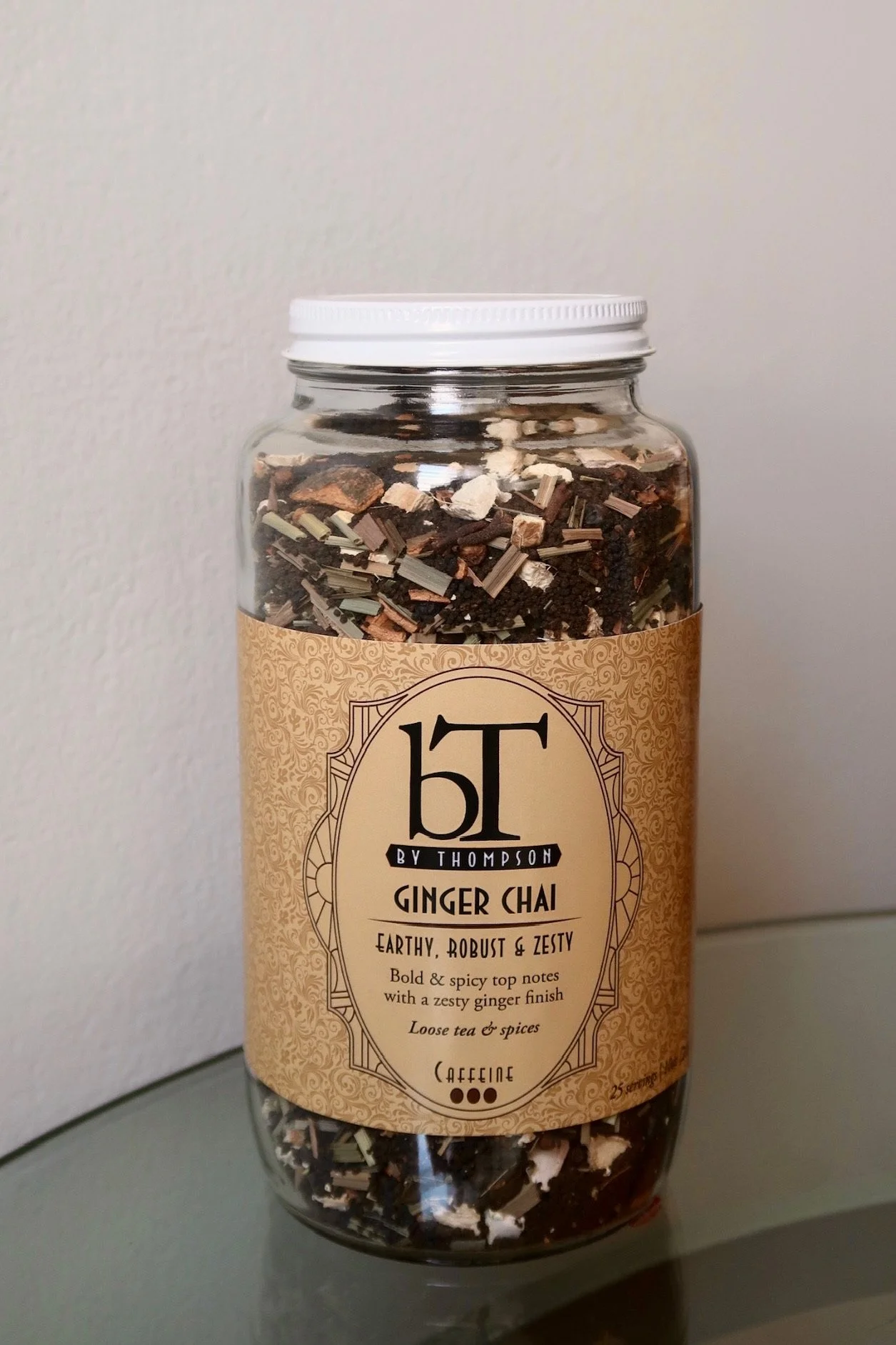
CTC black tea, cinnamon, cloves, ginger, lemongrass, peppermint
Contains Caffeine
Description
Ginger Chai combines the strong, rich malty robustness of CTC (crush tear cut) black tea with aromatic spices and herbs. This unique Chai blend is loved by many. A mood boost in a mug, a balm for upset stomachs and keeping nausea at bay. This is a rich chai and my founder’s pick.
Ingredients
CTC Black tea, Cinnamon, Ginger, Cloves, Green Cardamom, Lemongrass
Contains Caffeine.
Weight and serving
2 tbs = 1 oz
The large 320z jar holds 16oz/454g
the small 16 oz jar holds 8oz/226
Taste & Aroma Notes
Earthy and zesty top notes with a mint finish
How To Prepare
The Traditional Indian Way - Mix 1 fully heaped tablespoon of Ginger Chai blend, 1 cup water, and 1 cup milk in a saucepan. Bring to a boil then reduce the heat and simmer for 5 minutes. At any point during the boiling process you may add your sweetener, or not. Remove from heat strain into a mug or pitcher and enjoy! Chai can also be enjoyed over ice.