
Ingredient Highlight: Hibiscus
Discover Hibiscus: Its Origin, Taste, Benefits and Uses
Hibiscus, an ingredient that makes the art of tasting and drinking tea feel more profound. Primarily known as Hibiscus sabdariffa, this ingredient is celebrated worldwide given its vibrant deep red color infusion, refreshing flavors, uses and beliefs in its possible health benefits as an antioxidant that support cardiovascular and metabolic activities.
Origin
Hibiscus is thought to have originated from tropical Africa, particularly in Sudan and West African region, with its cultivation and use dating back thousands of years. It spread to other regions across the world through trade, migration, and transatlantic slave trade to regions of Latin America, the Caribbean, Asia and other tropical regions that the plant thrives. As it spread to regions around the world, different cultures gave it different names and aliases. Some of thepopular names around the world include;
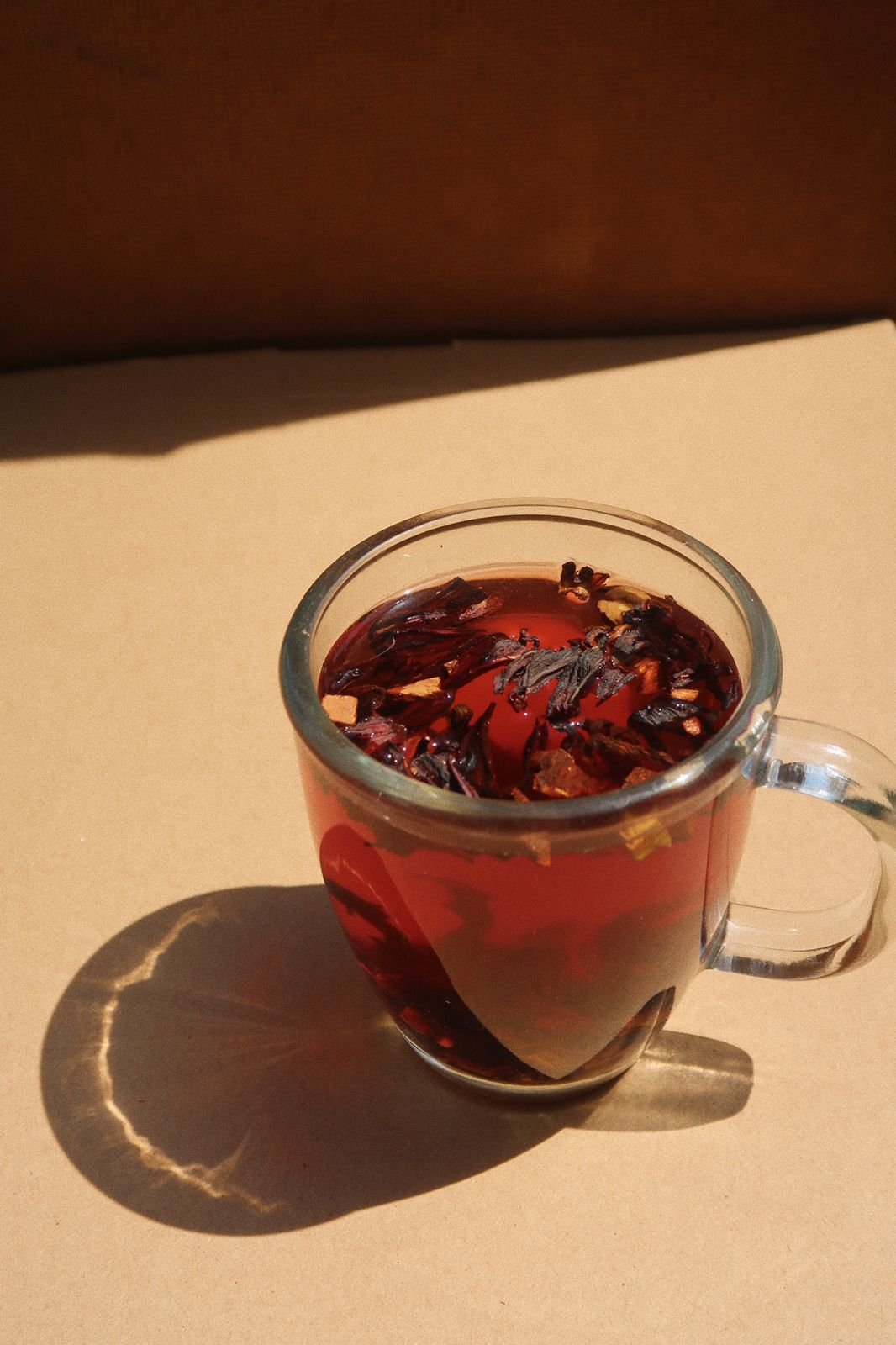
Hibiscus as an ingredient in the Cinnamon Twist blend.
• Sorrel in Jamaica and the Caribbean
• Agua de Jamaica, rosa de Jamaica in Mexico/Latin America
• Bissap in Senegal, Sobolo in Ghana, and Zobo in Nigeria
• Karkade in Egypt and Sudan
• Gongura in India
• Krajeab in Thailand
• Roselle in England (English)
Taste
Hibiscus has a bold, tart, tangy and floral tastes with fruity undertones. The fruity taste mimics those of berries like cranberry and pomegranate. Despite some people describing it as generally sweet with bias on picking the fruity note flavours, some find it sour and refreshing if added or served with sweeteners such as sugar and honey. However, the taste mostly depends on preparation methods and level of ingredient freshness which can give hints of citrus, rose or even woodiness. Dried hibiscus may yield a more intense tangy and thirst-quenching flavor.
Benefits
Hibiscus, backed with human clinical trials data and various studies, has various health benefits that contributes to its reputation and use in traditional medicine. The ingredient is rich in antioxidants such as polyphenols, anthocyanins, and vitamin C that are essential in enhancing health and wellness. Drinking an average of 2 cups of hibiscus tea daily may lower cortisol levels and balance neurotransmitters promoting a good mood, reducing anxiety. This makes it a preferred choice amongst drinkers who struggle with anxiety disorders and need to improve their sleep quality.
Regular consumption of hibiscus tea significantly lowers both systolic and diastolic blood pressure. This manages some mild cases especially in people with pre-hypertension or mild hypertension conditions. Hibiscus can lower fasting blood glucose and improve insulin sensitivity improving blood sugar control and metabolic support. The antioxidant and anti-inflammatory effects are other underpinning benefits that largely contributes to reducing risks associated with cardiovascular diseases and general immune and cellular protection.
Cultural Uses
Hibiscus is a highly versatile ingredient that serves a variety of functions depending on cultural heritage and uses. Around the world, hibiscus is used to make beverages such tea when complimented or sweetened with sugar, honey, ginger orcitrus. The sweeteners can be combined or used singly depending on individual preferences. The ingredient is also used in culinary arts to make syrups, jams, sauces, pickles, salads, or added to soups for its tartness and rich color. Overall, most cultures use hibiscus as a natural food color for desserts and cocktails, in addition to other traditional remedies.
At By Thompson, we ensure that your experience and feeling while drinking our hibiscus flavored tea is memorable than the borrowed time spent overlooking the New York city skylines. Click here to make your order today. Here are our 3 blends that contain Hibiscus fruit.
Cinnamon Twist
Elderberry Healer

Captured in Jamaica, the Hibiscus plant bearing the fruit and flower. We use the fruit to make beverages.